
Table of Contents
Understanding the Need for Made to Measure Socket Spacers
In high end interior design and professional electrical work, precision is paramount. A made to measure socket spacer is a custom manufactured extension frame, engineered to solve a common yet frustrating problem: the sunken electrical backbox. During renovation projects involving tiling, plastering, or wall panelling, the final wall surface becomes thicker. This leaves the Pattress box recessed, making it impossible for standard screws to secure the faceplate and creating an unsightly gap.
A made to measure spacer bridges this gap with millimetre accuracy. Unlike off the shelf solutions, it is not just a functional extender; it is an architectural component. Designed to match the exact height and width of the faceplate, it creates a seamless, minimalist extension from the wall. This ensures the socket or switch appears fully integrated with its surroundings, preserving the clean lines and flush finish demanded in modern interiors. This focus on a perfect fit is what separates a professional, lasting installation from a temporary fix.
The Problem of the Sunken Backbox
The issue begins when a new layer is added to a wall. Whether it is a sleek kitchen splashback, decorative wooden panelling, or a fresh coat of plaster, the wall depth increases. The electrical backbox, fixed to the original structural wall, is now too deep. This leads to several immediate problems for electricians and discerning homeowners:
-
Screws Fail to Reach: The standard 3.5mm fixing screws supplied with faceplates are no longer long enough to engage with the threaded lugs on the backbox.
-
Unstable Fittings: Without a solid base, tightening the faceplate can cause it to bend, warp, or even crack. The fitting feels loose and insecure.
-
Aesthetic Flaws: A visible, shadowy gap appears between the wall and the faceplate, collecting dust and ruining the intended flush aesthetic. This small detail can compromise the entire look of a finished room. For a detailed look at this common issue, our guide on solving sockets that do not reach after plastering offers further insights.
Why Off the Shelf Spacers Often Fail
While generic spacers are available in standard depths like 10mm or 20mm, renovation projects rarely conform to these neat measurements. A wall might be built up by 7mm after tiling or 13mm after plastering, leaving standard options unsuitable.
-
Incorrect Depths: Using a 10mm spacer for a 13mm gap still leaves the socket recessed and unstable. Over-tightening to compensate can damage the faceplate or the wall finish.
-
The Instability of Stacking: Some resort to stacking multiple thin plastic shims or packers. This creates a wobbly, uneven foundation. The faceplate is prone to tilting and can never be secured perfectly flat, compromising both safety and appearance.
-
Mismatched Footprint: Crucially, many standard spacers do not share the exact dimensions of the faceplate. They can be slightly smaller or larger, creating an ugly, layered look that disrupts the clean, minimalist finish you are trying to achieve. A made to measure solution is designed to be invisible, blending perfectly with the faceplate's profile.
For a flawless result that matches your wall's unique depth, a bespoke solution is the only professional choice. You can create a spacer with the perfect fit for your project, ensuring a secure and visually perfect finish.
Technical Specifications of Bespoke Extension Frames
A professional finish is built on technical precision. Made to measure socket spacers are not generic plastic rings; they are engineered components designed for safety, durability, and a perfect aesthetic integration. From the exact gang configuration to the specific millimetre thickness, every aspect is customisable to meet the demands of a specific installation.
Gang Sizes and Configuration Options
Electrical fittings come in a wide variety of sizes, and a one size fits all approach is simply not viable for high quality work. Bespoke manufacturing accommodates every common UK standard and beyond.
-
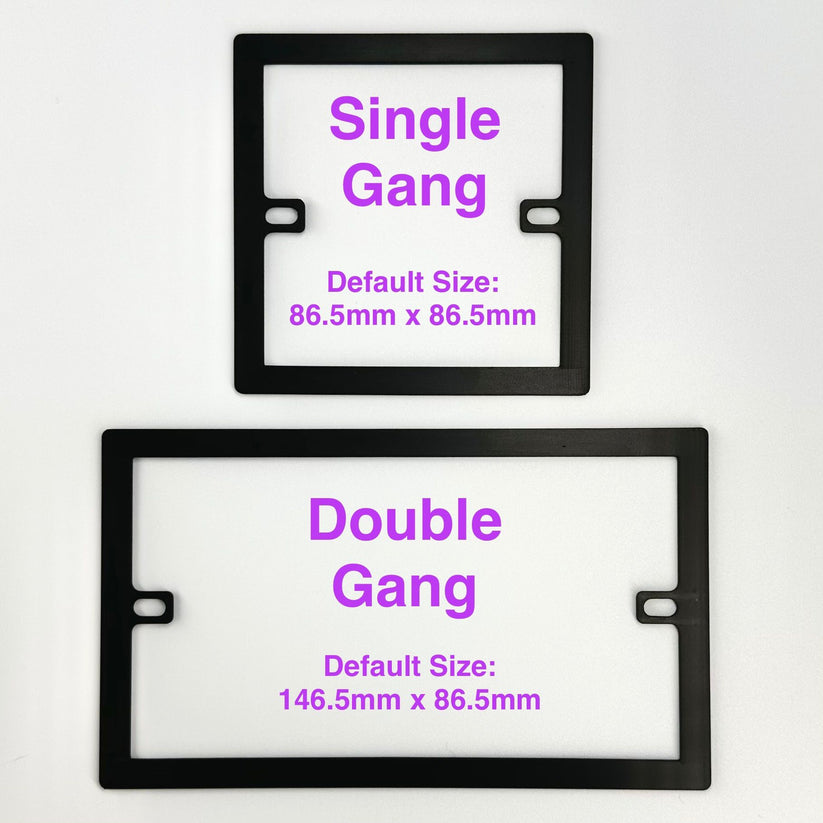
Custom Double Gang Socket Spacers: The most common requirement in UK homes, these spacers are milled to the precise 146mm x 86mm footprint of a standard double socket faceplate, ensuring a seamless border.
-
Bespoke Single Gang Options: Perfect for light switches, dimmer modules, and single sockets, these are made to the 86mm x 86mm standard, providing a clean extension for smaller fittings.
-
Multi-gang Solutions: For complex installations like media walls or kitchen control panels, custom spacers can be created for 3-gang, 4-gang, or even larger, non-standard switch banks, maintaining structural rigidity and a consistent look across the entire plate.
Precision Thickness and Millimetre Accuracy
The core benefit of a made to measure spacer is the ability to specify the exact thickness required. This eliminates guesswork and the need for untidy compromises.
-
The Perfect Depth: Whether you need a 4mm spacer for thin tiles or a 19mm spacer for deep panelling, you can order the exact size. This ensures the faceplate sits perfectly flush with the wall surface, with no gaps or protrusions.
-
Eliminating Messy Fixes: With an exact-fit spacer, there is no need to fill gaps with decorators caulk or silicone sealant, which can discolour, shrink, and ruin the clean lines of the installation.
-
Maintaining Rigidity: A single, solid spacer provides a stable and flat mounting surface across the entire back of the faceplate. This prevents flexing or bowing when the screws are tightened, protecting the faceplate from stress fractures.
Materials and Durability
The material used for a socket spacer is critical for both safety and long term aesthetics. Our spacers are manufactured from high quality, durable thermoplastics chosen for their suitability in electrical environments.
-
Safety and Heat Resistance: The materials are tough, heat resistant, and have excellent electrical insulation properties, ensuring they comply with safety standards and will not degrade under normal operating conditions.
-
UV Stability: Spacers are UV stable to prevent discolouration over time, especially for white fittings exposed to direct sunlight. The colour will remain consistent with the faceplate for years to come.
-
Structural Integrity: The material is chosen for its rigidity and strength, ensuring it will not compress, crack, or deform when the faceplate screws are tightened to a secure torque. This guarantees a solid and safe installation.

Bespoke Solutions vs DIY Shims: A Professional Comparison
When faced with a sunken backbox, the temptation can be to reach for a quick, makeshift solution like stacking washers or plastic packers. However, for a professional tradesperson or a quality conscious homeowner, the difference between a bespoke spacer and a DIY shim is profound. It is a choice between a permanent, safe, and aesthetically perfect solution and a temporary, unstable, and visually flawed compromise. For a deeper analysis, explore our comparison of professional spacers versus DIY shims.
The Danger of Makeshift Shims
Using individual washers, folded cardboard, or snapped-off pieces of plastic as shims behind a faceplate is a common but deeply flawed practice. This approach introduces instability and risks that a professional cannot afford to take.
-
Tilted and Wobbly Faceplates: It is nearly impossible to stack loose shims to a perfectly uniform height. This results in a faceplate that tilts or rocks when touched, feeling cheap and insecure.
-
Risk of Cracking: Tightening screws against an uneven, shimmed surface creates isolated pressure points on the back of the faceplate. This stress can easily cause brittle faceplates, such as those made from urea-formaldehyde or decorative metal, to crack.
-
Compromised Safety: A poorly supported faceplate may not form a proper seal against the wall, potentially compromising the IP rating of the installation in areas like kitchens. Furthermore, a loose fitting is not considered a "neat and workmanlike" installation under UK electrical regulations.
Aesthetic Superiority of Made to Measure Parts
The primary goal of a high quality installation is a flawless finish. This is where made to measure spacers truly excel, providing an aesthetic that DIY methods can never replicate.
-
A Seamless, Minimalist Transition: A bespoke spacer is manufactured to the exact same width and height as the faceplate it supports. It does not sit behind the plate; it becomes a seamless extension of it. The result is a clean, single architectural block that extends neatly from the wall, rather than a messy, layered look.
-
Eliminating the "Shadow Gap": The precision fit of a custom spacer completely eliminates the dark, dust-trapping gap between the wall and the faceplate. This creates a much cleaner, more integrated, and professional appearance.
-
Preserving Professional Reputation: For electricians and builders, the quality of the finish is a direct reflection of their workmanship. Using bespoke parts demonstrates a commitment to quality and attention to detail, building client trust and enhancing professional reputation. You can see what other tradespeople think by looking at reviews from our parent company, available on 2d6.co.uk.
Achieving this level of minimalist perfection is a straightforward process. You can specify your exact requirements online to get a component that guarantees a flawless finish every time.
Installation Best Practices and Safety Regulations
While made to measure socket spacers solve an aesthetic problem, their use is also governed by the principles of electrical safety. Any work on electrical systems must result in a secure, compliant, and safe installation. A properly specified and installed spacer is a key part of achieving this, especially in modern installations with crowded backboxes.
Managing Crowded Backboxes and Smart Switches
Modern electrical fittings, particularly smart switches and dimmer modules, are often much deeper than their traditional counterparts. This can make fitting all the wiring into a standard backbox a significant challenge.
-
Creating Essential Wiring Space: A spacer can provide a crucial few extra millimetres of depth. This additional space prevents wires from being dangerously compressed or trapped when the faceplate is installed, reducing the risk of damage to the cable insulation.
-
Avoiding Wall Chasing: Using a spacer is a far cleaner and less disruptive alternative to chasing out the wall to install a deeper backbox. It saves time, reduces mess, and is a more cost effective solution.
-
Protecting Cables: A well designed spacer provides a smooth, continuous surface between the backbox edge and the faceplate, protecting cable sheathing from being snagged or stripped on the sharp metal edges of the pattress box. For more on this, read our essential guide to custom depth light switch spacers.
Compliance with UK Electrical Standards
Using a professional, made to measure socket spacer helps ensure that an installation remains compliant with UK electrical standards, such as BS 7671.
-
Secure Fixing: Regulations require that electrical accessories are securely fixed in place. A spacer provides a solid, stable platform, allowing the faceplate to be tightened correctly without wobbling or risk of coming loose over time.
-
Maintaining Earth Continuity: For metal faceplates, a secure fitting is essential for maintaining a reliable earth connection between the faceplate and the backbox via the fixing screws. A wobbly plate can compromise this path.
-
"Neat and Workmanlike" Finish: The regulations require all electrical work to be carried out in a "neat and workmanlike manner". A flush, secure, and perfectly aligned faceplate achieved with a custom spacer meets this standard, whereas a gapped, tilted plate fixed with shims does not.
Always ensure that the power is isolated at the consumer unit before carrying out any electrical work, and if you are in any doubt, consult a qualified electrician.
How to Order Your Made to Measure Spacers
The process of acquiring the perfect spacer is designed to be simple and precise. By taking a careful measurement and using our online configuration tool, you can specify a spacer that meets your exact needs for depth, size, and colour, ensuring a flawless installation.
Measuring for Perfection
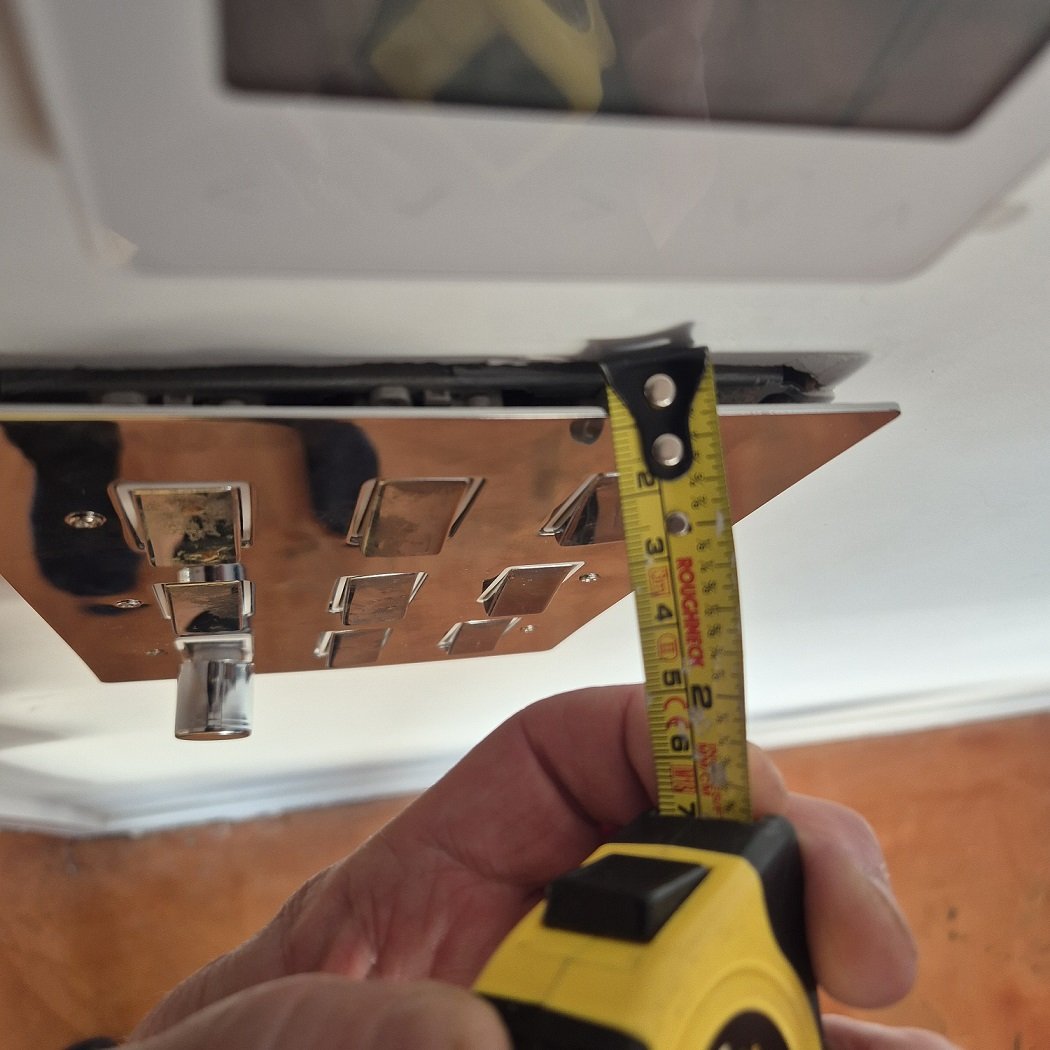
Accuracy is key. A precise measurement is the first step towards achieving a seamless finish. The goal is to measure the exact gap between the front edge of the sunken backbox and the final, finished wall surface.
-
Use a Straight Edge: Place a straight edge (like a ruler or spirit level) across the opening of the backbox, resting on the finished wall surface.
-
Measure the Gap: Use another ruler or a digital calliper to measure the distance from the front edge of the backbox's threaded lug to the underside of your straight edge. This measurement is the required thickness for your spacer.
-
Verify the Gang Size: Confirm the size of the fitting. A standard UK single gang is approximately 86mm x 86mm, and a double gang is 146mm x 86mm. Note any non-standard sizes for multi-gang plates.
Configuring Your Custom Spacer Online
Once you have your precise measurements, ordering a bespoke spacer is a straightforward online process. Our tool allows you to input your exact specifications to create a component tailored to your project.
-
Select Gang Size and Thickness: Choose the correct gang configuration and enter the exact thickness you measured, in millimetres.
-
Customise Your Finish: Select a colour that best matches your faceplate to ensure the spacer blends in seamlessly, creating a cohesive and minimalist look. Options typically include standard white, black, and grey to suit the most popular electrical accessories.
-
Finalise Your Order: Once you have entered all your specifications, you can finalise the details and place your order. The component will be manufactured to your precise requirements and delivered ready for installation.
To ensure a perfect, professional finish for your next project, you can design and order your custom spacer here.
Frequently Asked Questions
What are made to measure socket spacers used for? They are used to bridge the gap created when an electrical backbox becomes recessed after tiling, plastering, or adding wall panels. They provide a solid, secure, and flush mounting surface for sockets and switches, ensuring a professional finish.
How do I know what thickness of spacer I need for my tiles? Place a straight edge across the hole on the finished tile surface. Then, measure the distance from the front of the backbox lug to the back of the straight edge. This measurement in millimetres is the exact spacer thickness you require.
Can I use these spacers for both light switches and plug sockets? Yes. Our spacers can be custom made for any standard UK fitting, including single gang light switches, double gang plug sockets, dimmer switches, and larger multi-gang media plates.
Are custom socket spacers compliant with UK building regulations? Yes. When installed correctly, they help ensure the installation is safe, secure, and meets the "neat and workmanlike" standard required by regulations like BS 7671. They are made from durable, heat resistant materials suitable for electrical installations.
Do you offer spacers for multi-gang or non-standard electrical plates? Yes, we specialise in bespoke solutions. We can manufacture spacers for 3-gang, 4-gang, and other non-standard or oversized plates often used for home automation or media systems.
What colours are available for the bespoke extension frames? Our standard colours are white, black, and grey to seamlessly match the most common faceplate finishes available in the UK. This ensures the spacer integrates visually with the fitting for a minimalist look.
How long does it take to manufacture and deliver a custom spacer? Manufacturing and delivery times can vary, but because each spacer is made to order, we aim to dispatch as quickly as possible. Please check the website for current lead times when you place your order.
Can I stack two spacers if I need more depth later? We strongly advise against stacking spacers. This can create instability and a weaker mounting point. The most professional and secure solution is to order a single, solid spacer of the correct, combined thickness for a perfect and safe fit.
Electrical Safety
Always isolate the circuit and confirm it is dead before removing a socket or switch faceplate. Only carry out the work if you are competent to do so. If you find damaged wiring, signs of overheating or anything unsafe, stop and contact a qualified electrician.