
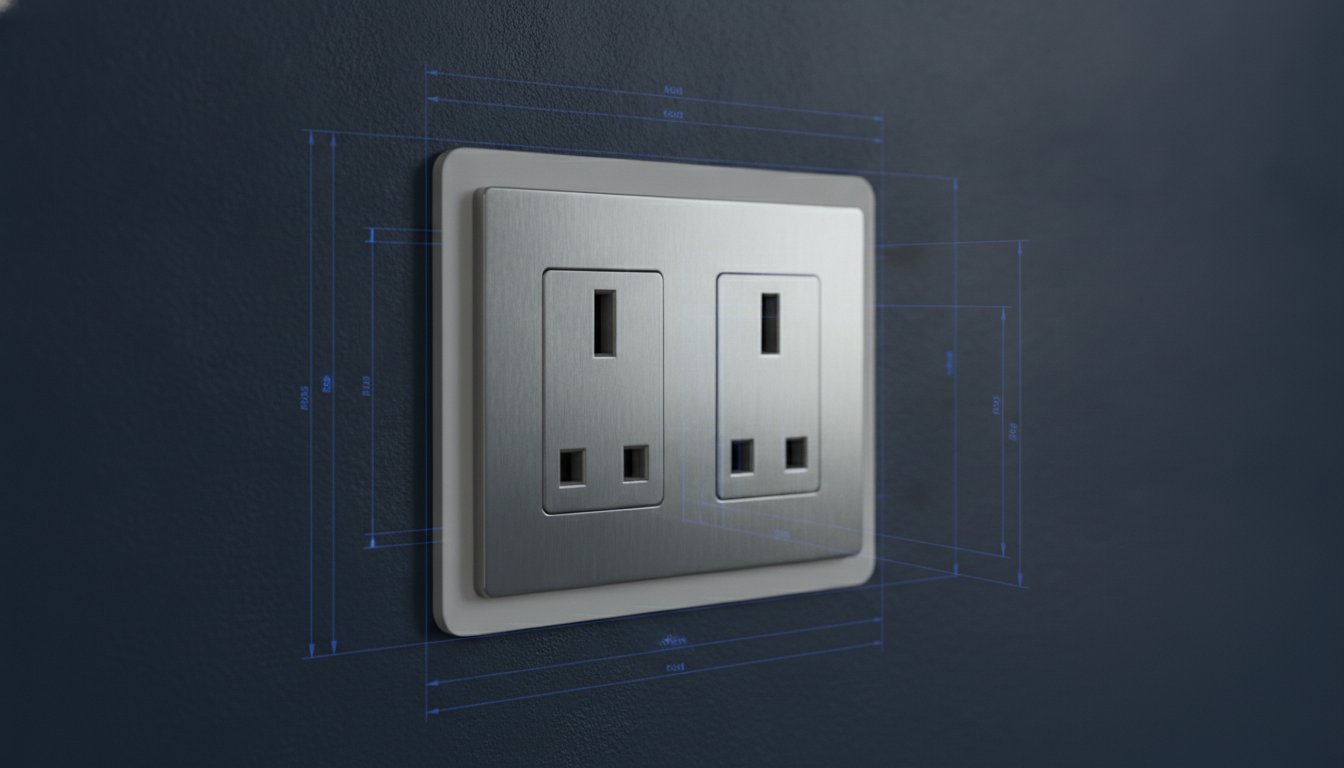
A single millimetre of exposed backbox can turn a high-end renovation into a source of client complaints and a potential safety failure. With 72% of Britons planning home improvements in 2026, electricians are increasingly facing challenges from thick wall panels and deep plasterwork. Using bespoke socket spacers for electricians is no longer just about aesthetics; it is about maintaining structural integrity. Before you resort to stacking flimsy plastic rings, you can use our Build My Spacer configurator tool to specify the exact depth your installation requires.
You likely agree that a flush, sturdy finish is the hallmark of a quality job, yet achieving this on uneven walls often feels like a losing battle. This guide will show you how to eliminate gaps behind faceplates and ensure full compliance with the BS 7671:2018+A4:2026 regulations. We will examine why bespoke spacers provide the necessary enclosure protection and how they create the essential wiring space needed for modern smart home modules. By the end, you will know exactly how to measure and specify the perfect extension frame for any project.
Key Takeaways
- Learn how to select the right socket spacers for electricians to eliminate the "floating socket" look and ensure a flush finish against tiles or plasterboard.
- Understand the latest BS 7671:2018+A4:2026 requirements regarding enclosure gaps to ensure your installations remain safe and compliant.
- Discover why bespoke spacers provide a more professional and sturdy alternative to stacking multiple thin, off-the-shelf plastic shims.
- Gain insights into creating necessary wiring space for deep smart home modules without the need for messy wall modifications.
- Master the measurement process for specifying custom extension frames using the Build My Spacer configurator tool to save time on site.
Table of Contents
- Understanding the Challenges of Sunken Backboxes in UK Installations
- Comparing the Best Socket Spacers for Electricians and Contractors
- Essential Applications: When to Specify Custom Socket Extension Frames
- How to Measure and Specify Made to Measure Socket Spacers
- Why SocketSpacers.com is the Preferred Choice for UK Tradespeople
Understanding the Challenges of Sunken Backboxes in UK Installations
In UK electrical installations, a common frustration arises when a Pattress box becomes too deeply recessed after a wall is finished. Whether it's a new layer of plaster or a decorative tiled splashback, the result is a sunken backbox that makes it impossible to secure the faceplate firmly against the wall surface. This leads to the "floating socket" effect. It's a clear sign of poor craftsmanship that clients immediately notice. If you're currently facing this issue, using the Build My Spacer configurator tool allows you to specify a millimetre-perfect solution immediately.
A flush fit isn't just about looks; it's a mechanical necessity. When a socket isn't properly supported by the wall or a spacer, every time a plug is inserted or removed, the faceplate flexes. This movement puts stress on the terminal connections and the mounting screws. Over time, this can lead to loose wiring or cracked faceplates. High-quality socket spacers for electricians provide the rigid support needed to prevent this mechanical fatigue and ensure the installation remains sturdy for years.
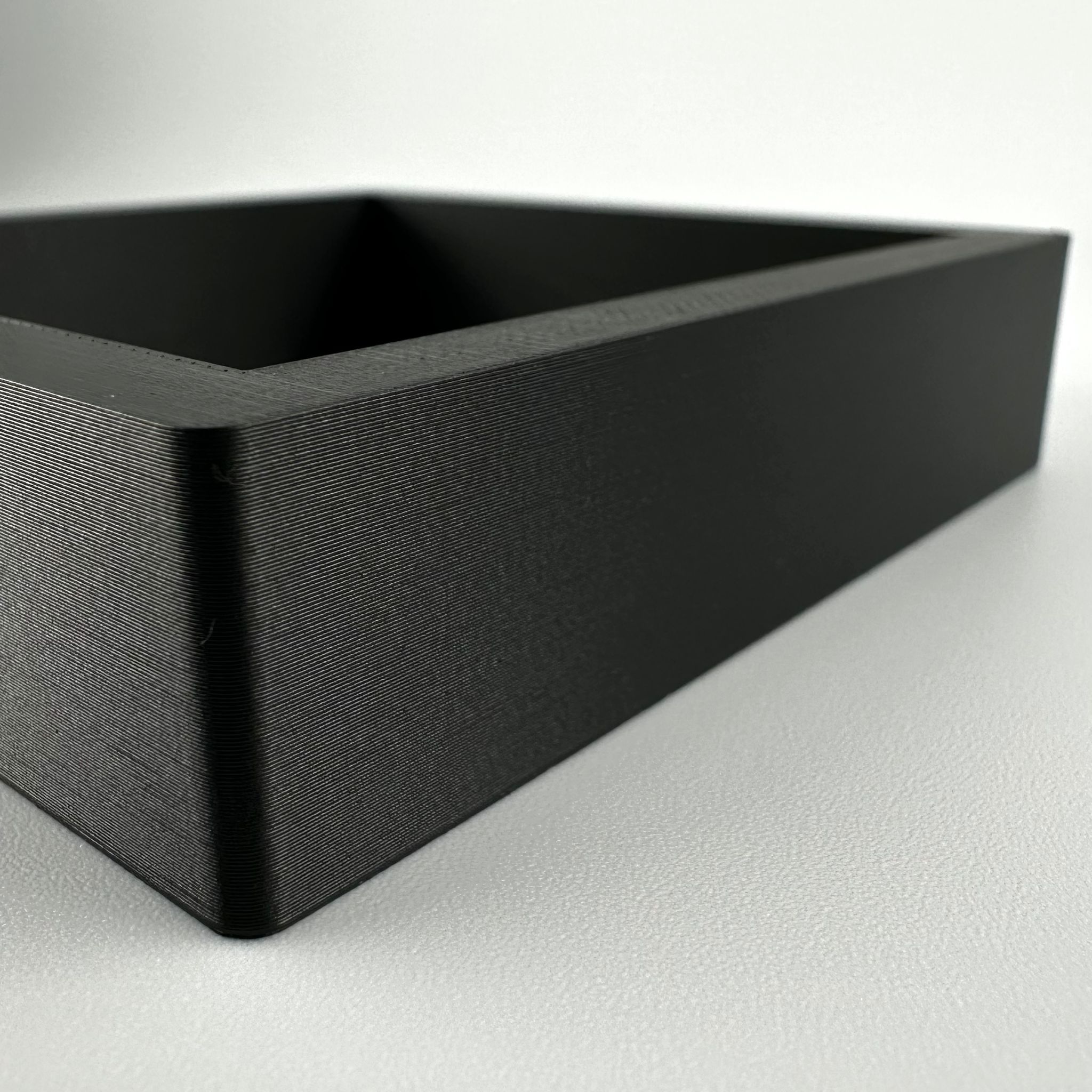
Why Standard Spacers Often Fall Short
Standard 10mm or 32mm spacers frequently fail to meet the needs of modern UK homes. A 10mm spacer might be too thin for a new tiled wall, whilst a 32mm version is far too thick. This often forces contractors into poor workarounds, such as:
- Stacking multiple cheap spacers, which creates an unstable and spongy mounting surface.
- Leaving the faceplate "floating" on the screws, which looks unprofessional and risks damage.
- Using makeshift shims that don't provide a continuous enclosure.
When working with unique materials like thick oak panelling or bespoke stone cladding, depth requirements are rarely found in off-the-shelf products. These scenarios demand a tailored approach that standard moulded parts cannot provide. Precision is key to maintaining a professional reputation.
The Impact on Wiring Space and Safety
Safety is the primary concern when dealing with recessed enclosures. Under the BS 7671:2018+A4:2026 regulations, electrical enclosures must be continuous to prevent the spread of fire and protect against dust ingress. A gap between the backbox and the faceplate breaks this continuity. Additionally, modern installations often require extra depth for smart dimmers or Zigbee modules. If the backbox is sunken, there's often insufficient room to fold the cables safely without crushing them. You can read more about managing plug socket wiring space to understand how custom spacers help maintain these safety standards. Using dedicated socket spacers for electricians ensures the enclosure remains secure whilst providing the extra millimetres needed for complex wiring.
Comparing the Best Socket Spacers for Electricians and Contractors
When selecting socket spacers for electricians, the choice between a mass-produced frame and a tailored solution often determines the final quality of the installation. Generic moulded spacers, like those found in major trade outlets, are typically limited to fixed depths such as 10mm or 32mm. If your wall gap is 14mm, a 10mm spacer leaves a 4mm void, whilst a 32mm version requires manual trimming or creates an unsightly protrusion. This lack of precision often leads to the use of multiple stacked parts, which compromises the rigidity of the faceplate and produces a spongy finish.
Bespoke solutions offer a significant advantage in both aesthetics and safety. Using a single, solid part manufactured to your exact specifications ensures that the faceplate sits perfectly flush without any movement. This approach is not just about visual appeal; it is a matter of compliance. Adhering to the BS 7671 Requirements for Electrical Installations means ensuring that enclosures are properly fitted to prevent dust ingress and maintain fire safety. You can find a range of UK socket spacers designed to bridge these specific gaps perfectly.
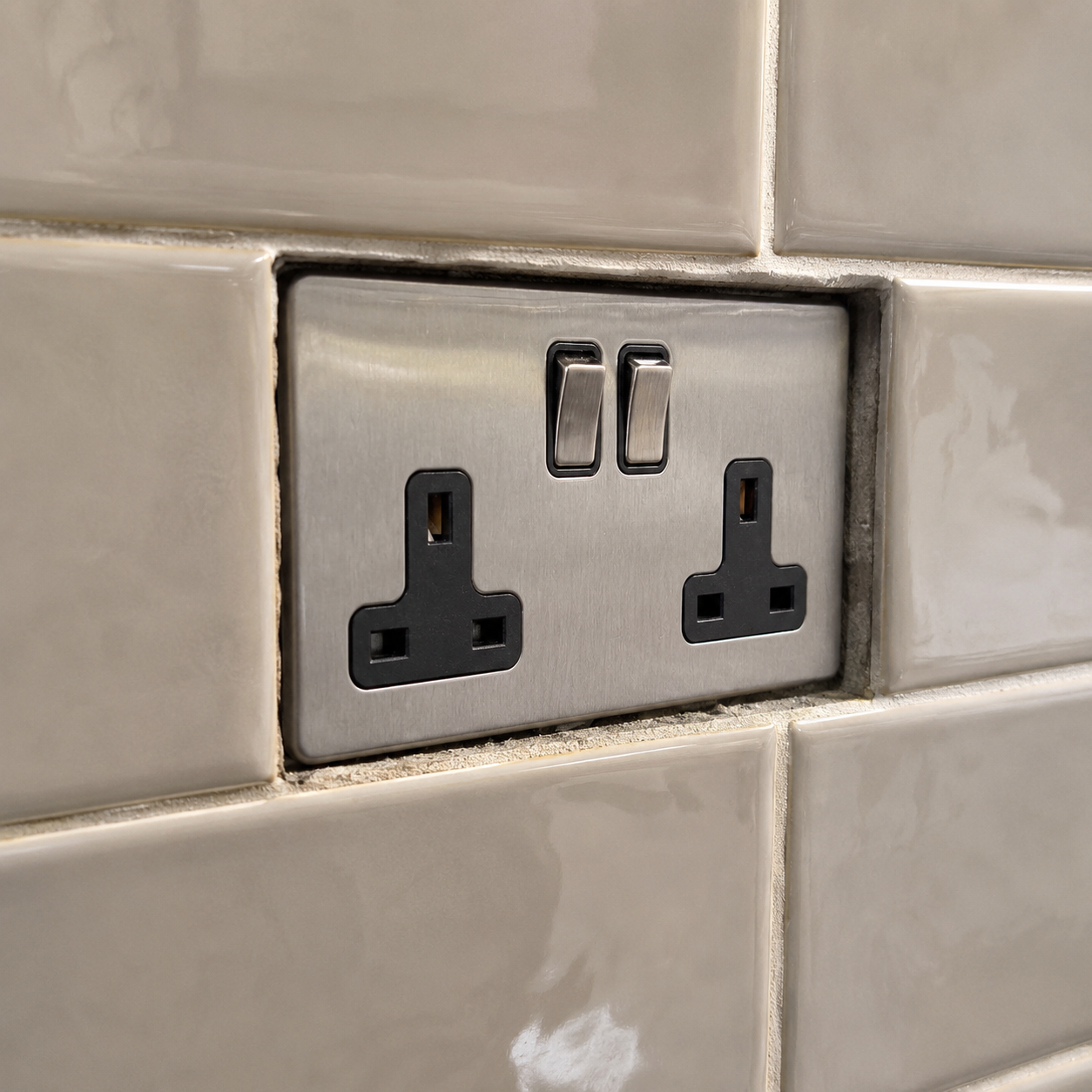
Off-the-Shelf Moulded Spacers vs Bespoke Solutions
Standard retail products are often made from thin polycarbonate that can warp under pressure. Whilst they are readily available for immediate pickup, they rarely provide the professional finish required for high-end residential or commercial contracts. Tradespeople are increasingly moving away from these generic parts because the labour time spent trying to make a 10mm spacer fit a 12mm gap quickly outstrips the cost of a custom part. A bespoke spacer provides a continuous, clean edge that matches the profile of the faceplate exactly, eliminating the stepped look of stacked generic frames. For the most precise results, the Build My Spacer configurator tool allows you to order the exact depth needed for any non-standard wall finish.
Professional Socket Spacer vs DIY Shim
The temptation to use washers or scraps of plastic as shims is common on site, but these quick fixes lack long-term reliability. DIY shims do not support the entire perimeter of the faceplate, which often leads to screw shearing or the faceplate cracking when a user applies pressure. In contrast, a professional spacer provides a solid foundation across the entire mounting surface. You can explore the detailed differences in our guide on the Professional Socket Spacer vs DIY Shim. Using dedicated socket spacers for electricians ensures the installation feels as solid as if the backbox were flush with the surface, preventing call-backs and maintaining client trust.
Essential Applications: When to Specify Custom Socket Extension Frames
Standard extension collars often fall short in high-spec UK renovations where millimetre precision is non-negotiable. Whilst a standard 10mm collar might suffice for a basic plaster finish, it rarely accommodates the varied depths of modern kitchen splashbacks or bathroom tiling. If you are dealing with multiple plates in a single row, alignment becomes a significant hurdle. These multi-gang socket spacers provide a unified frame that ensures every faceplate is perfectly level, preventing the staggered appearance common when using individual, unlinked spacers. For complex configurations or unusual depths, the Build My Spacer configurator tool allows you to specify dimensions that off-the-shelf products simply don't offer. This ensures that even the most intricate multi-gang setups maintain a rigid, unified finish that feels as solid as the wall itself.
Navigating Kitchen Tiling and Wall Panelling
Calculating the required depth for metro tiles and their associated adhesive beds is a common challenge on site. These tile installations frequently result in a recess of 12mm to 18mm. Using standard 10mm socket spacers for electricians in this scenario leaves a visible gap, whilst a 20mm spacer would cause the socket to protrude awkwardly. Bespoke extension frames allow you to match the depth of the finished wall exactly, providing a clean, professional edge. This precision is equally critical for traditional wood panelling projects where thick oak or MDF panels create a deep, solid void. If you have redecorated and found your screws no longer reach the backbox, a custom-depth spacer is the only reliable way to restore a secure fix without risking damage to the new decorative finish.
Accommodating Smart Switches and Overcrowded Backboxes
The rapid adoption of smart home technology has significantly changed the spatial requirements of the standard backbox. Zigbee modules, smart dimmers, and WiFi-enabled sockets are often twice the depth of traditional hardware. Retrofitting these components into existing shallow boxes usually leads to overcrowded wiring, which can cause mechanical stress on terminals or wire fatigue. Specifying bespoke extension frames provides the necessary depth to house these modules safely without forcing the wires into a cramped space. This increased volume is also beneficial for airflow; maintaining adequate heat dissipation is vital for the longevity of electronic components in crowded boxes. Using high-quality socket spacers for electricians ensures that even the most tech-heavy installations remain tidy, accessible, and compliant with safety standards.

How to Measure and Specify Made to Measure Socket Spacers
Achieving a professional, flush finish with socket spacers for electricians depends entirely on the accuracy of your initial measurements. A gap that is slightly off will prevent the faceplate from seating correctly, leading to the mechanical instability discussed in earlier sections. To measure correctly, you should use a vernier calliper or a precise steel rule rather than a standard tape measure. Place the tool against the front edge of the backbox and measure the distance to the outer surface of the finished wall. It's essential to account for all layers, including plaster, adhesive, and decorative finishes, to ensure the spacer bridges the void perfectly.
Once you have determined the depth, you can use the Build My Spacer configurator tool to input your exact requirements. This tool is designed to handle millimetre-perfect specifications that off-the-shelf products cannot match. By specifying the exact depth needed, you eliminate the need for on-site modifications, which often compromise the integrity and appearance of the final install. Precision at this stage ensures a sturdy, compliant result that meets the expectations of high-end clients.
Calculating the Exact Depth Required
Precision is the priority when specifying custom components. Whilst it might be tempting to guess the depth based on standard tile thicknesses, adhesive beds can vary significantly across a single wall. If you're working on an uneven surface, measure the depth at all four corners of the backbox and use the most prominent value to ensure the faceplate remains level. Using a depth gauge provides the most reliable data. Remember that it's always better to measure twice and order once; a bespoke part is manufactured to your specific data, so accuracy is vital for a seamless fit. This methodical approach is what separates a standard trade install from a bespoke electrical finish.
Selecting the Correct Gang Configuration
After confirming the depth, you must identify the plate size and configuration. Standard UK single gang plates are typically 86mm square, whilst double gang versions are 146mm wide. However, modern luxury projects often utilise bespoke multi-gang arrangements that combine power, data, and lighting controls into a single large plate. In these cases, specifying bespoke large extension frames ensures that the entire assembly is supported by a single, continuous structure. This prevents individual plates from shifting or becoming misaligned over time, which is a common issue when using separate, unlinked spacers. Whether you're fitting a standard light switch or a complex multi-gang unit, ensuring the spacer matches the faceplate profile is essential for a clean aesthetic.
Specify your bespoke dimensions using the Build My Spacer tool
Why SocketSpacers.com is the Preferred Choice for UK Tradespeople
Choosing the right supplier is as critical as the installation itself. SocketSpacers.com has established itself as the leading provider of socket spacers for electricians by focusing on precision rather than mass-market convenience. Unlike generic retail outlets that offer a limited range of fixed depths, our UK-based manufacturing facility allows us to produce components that meet the exact requirements of your specific project. This dedication to bespoke quality ensures that every installation, whether it involves a single light switch or a complex multi-gang unit, achieves a millimetre-perfect finish. Our internal production processes provide a reliable and professional supply chain for contractors who cannot afford delays on site.
The durability of our custom-fit socket and light switch spacer plates is a primary reason why tradespeople return to us. Standard polycarbonate parts found in trade counters can often crack or deform under the pressure of mounting screws, especially when bridging larger gaps. Our spacers provide a rigid, non-conductive foundation that supports the entire perimeter of the faceplate. This prevents the mechanical fatigue that leads to loose connections and expensive call-backs. For a more detailed look at the advantages of this approach, you can explore the Top 10 Benefits of Custom Fit Plug Socket Extension Frames.
Precision Manufacturing for Professional Results
We support high-end electrical contractors across the UK who specialise in luxury residential and commercial renovations. These projects often involve non-standard materials where a generic, off-the-shelf spacer is simply insufficient for the task. Our commitment to attention to detail means that we don't just sell a generic product; we provide a technical solution to a common architectural problem. By using the Build My Spacer configurator tool, you gain access to a manufacturing process that mirrors the high standards of your own craftsmanship. This ensures that the final finish is indistinguishable from an installation where the backbox was perfectly flush from the start.
Streamlining Your Workflow with Bespoke Orders
Bespoke ordering significantly reduces the need for on-site "bodging" or temporary fixes that compromise safety and aesthetics. When you specify the exact depth required during the planning or first-fix phase, you eliminate the time-consuming task of modifying generic parts to fit a 12mm or 14mm gap. This creates a consistent, high-quality finish across large-scale commercial projects where uniformity across dozens of outlets is essential. We offer national delivery to ensure your custom parts arrive exactly when they are needed for the second-fix. This streamlined approach allows you to complete your work with confidence, knowing the client will be satisfied with the sturdy and flush result.
Elevate Your Professional Installation Standards
Achieving a professional finish on every project requires more than just standard tools; it requires components that match the specific challenges of modern UK construction. By moving away from stacked, generic shims and adopting bespoke socket spacers for electricians, you ensure that every faceplate is mechanically stable and aesthetically perfect. This guide has highlighted how precision manufacturing in the UK allows for a tailored fit that meets the latest safety standards whilst accommodating deep smart home modules.
Providing a flush finish on non-standard wall surfaces such as oak panelling or metro tiles is no longer a source of frustration. With a precision fit for any depth, our components allow you to maintain high standards of craftsmanship that are trusted by professional electricians nationwide. You can now eliminate the floating socket effect and provide your clients with a sturdy, reliable installation that stands up to daily use without the risk of loose connections or cracked plates.
Build your bespoke socket spacer now
Take the guesswork out of your next second-fix and deliver a result that reflects your professional expertise.
Frequently Asked Questions
What size socket spacer do I need for a tiled kitchen wall?
You typically require a spacer that matches the combined thickness of the tile and the adhesive bed, which usually totals between 12mm and 18mm. It is best to use a depth gauge or steel rule to measure from the front edge of the backbox to the finished tile surface. Our bespoke manufacturing ensures you get a millimetre-perfect fit rather than settling for a standard size that leaves a visible gap.
Can I stack multiple 10mm spacers together for a deep backbox?
Whilst it is physically possible to stack multiple 10mm spacers, this practice is generally considered unprofessional and can lead to an unstable mounting surface. Stacking multiple generic parts often results in misalignment and visible seams between the layers. A single bespoke socket spacers for electricians provides a more rigid foundation that ensures the faceplate sits perfectly flush and secure without any sponginess.
Are these socket spacers compliant with UK electrical regulations?
Yes, our spacers are designed to help you comply with the BS 7671:2018+A4:2026 wiring regulations regarding enclosure continuity. By bridging the gap between a recessed backbox and the wall surface, these socket spacers for electricians maintain a protective barrier against dust ingress and fire hazards. They ensure the electrical enclosure remains continuous, which is a mandatory safety requirement for professional UK installations.
Do you manufacture bespoke multi-gang spacers for non-standard setups?
We specialise in manufacturing bespoke multi-gang spacers for non-standard configurations that off-the-shelf retailers don't carry. Whether you are installing a triple-gang plate or a custom large extension frame for a combined power and data module, we can create a unified frame to your exact dimensions. This prevents the alignment issues that occur when trying to use individual spacers side by side.
What is the difference between a socket surround and a socket spacer?
A socket surround is a decorative finger plate designed to protect the wall from marks, whereas a socket spacer is a structural extension frame used to bring a recessed backbox flush with the wall. Surrounds sit on the outside of the faceplate for aesthetics; spacers sit behind the faceplate to bridge a physical void. Spacers are essential for stability when the wall surface has been built out.
How much extra wiring space can a spacer provide for smart switches?
A spacer provides additional wiring space equal to its specified depth. For example, a 15mm spacer adds 15mm of extra room behind the faceplate, which is often essential for housing deep smart home modules or Zigbee dimmers. This prevents the need to chop out the back of a backbox and ensures cables aren't crushed, which maintains airflow and safety within the enclosure.
Can I order custom depths for light switch spacer plates?
You can order custom depths for light switch spacer plates to suit any wall finish, from thin plaster to thick timber panelling. Our manufacturing process allows for precision depth increments that standard retail products don't offer. If you have a specific depth requirement, you can use our Build My Spacer configurator tool to specify the exact millimetre depth needed for a professional result.
How quickly can bespoke spacers be delivered to a UK site?
Bespoke spacers are manufactured and dispatched directly from our UK facility to ensure reliable delivery to your site. Because we handle production and fulfilment internally, we can process and dispatch custom orders much faster than international suppliers. This allows electrical contractors to maintain project timelines without having to resort to temporary workarounds or inferior off-the-shelf parts that don't fit the job.
Electrical Safety
Always isolate the circuit and confirm it is dead before removing a socket or switch faceplate. Only carry out the work if you are competent to do so. If you find damaged wiring, signs of overheating or anything unsafe, stop and contact a qualified electrician.