
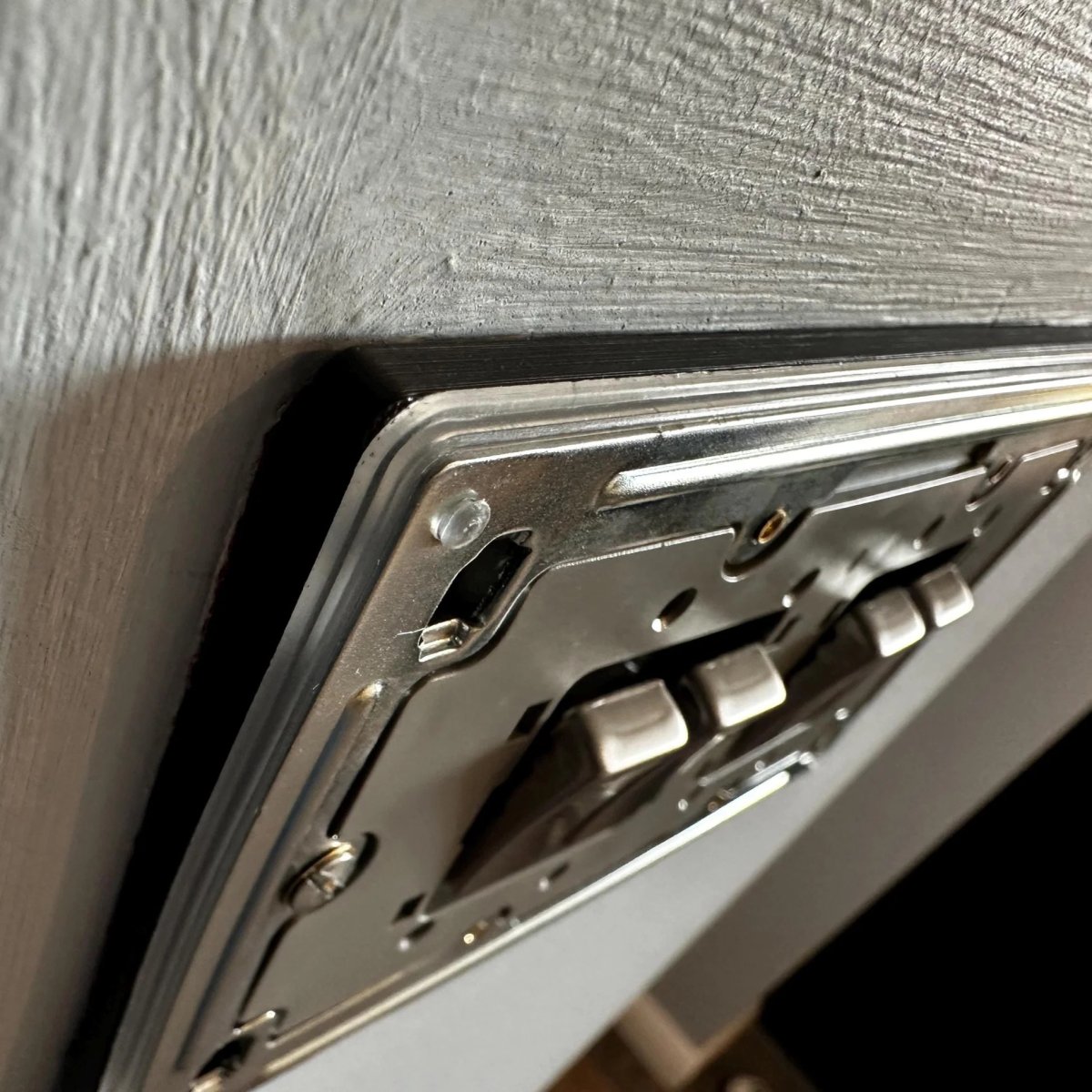
Why settle for a wobbly socket or a cracked faceplate when the solution to a recessed backbox is a matter of millimetre precision? If you've ever finished a tiling project or added acoustic panelling only to find your electrical box buried too deep, you know that standard shims rarely provide a stable fix. Using a custom size electrical pattress spacer is the only way to bridge that gap without compromising the structural integrity of the fitting. Before you reach for a stack of washers or attempt to over-tighten your screws, you can use our Build My Spacer configurator to specify the exact depth you need for a rock-solid result.
We understand that achieving a professional finish is about more than just looks; it's about ensuring full compliance with the latest UK wiring regulations. Discover how bespoke pattress spacers resolve recessed backbox issues whilst ensuring a professional, regulation-compliant finish for every electrical installation. This guide explores the technical necessity of precision manufacturing, providing a preview of accurate measurement techniques, technical comparisons against standard shims, and specific requirements for modern multi-gang and smart home setups.
Key Takeaways
- Learn how a custom size electrical pattress spacer provides a stable, single-piece solution for sockets recessed behind tiles or decorative panelling.
- Understand the safety requirements of the BS 7671:2018+A4:2026 regulations and how to maintain the integrity of electrical enclosures.
- Discover why bespoke manufacturing is superior to stacking standard shims for achieving structural stability and a professional aesthetic.
- Master the step-by-step measurement process to ensure your bespoke extension frames fit perfectly the first time.
- Explore advanced applications for multi-gang spacers and large extension frames in complex kitchen and media centre installations.
Table of Contents
- Understanding the Need for Custom Size Electrical Pattress Spacers
- Custom Spacers vs Standard Shims: A Technical Comparison
- How to Measure for Your Bespoke Pattress Spacer
- Advanced Applications for Large Extension Frames and Multi-Gang Spacers
- Why Bespoke Manufacturing is the Standard for Modern UK Electrics
Understanding the Need for Custom Size Electrical Pattress Spacers
A custom size electrical pattress spacer acts as a precision-engineered bridge between a recessed backbox and the finished wall surface. While a standard Pattress box definition covers the basic housing for switches and sockets, it doesn't account for the added depth of modern interior finishes. Whether you're a tradesperson finishing a high-end kitchen or a homeowner tackling a bathroom renovation, you can use our Build My Spacer configurator to specify the exact dimensions required for a safe, professional installation.
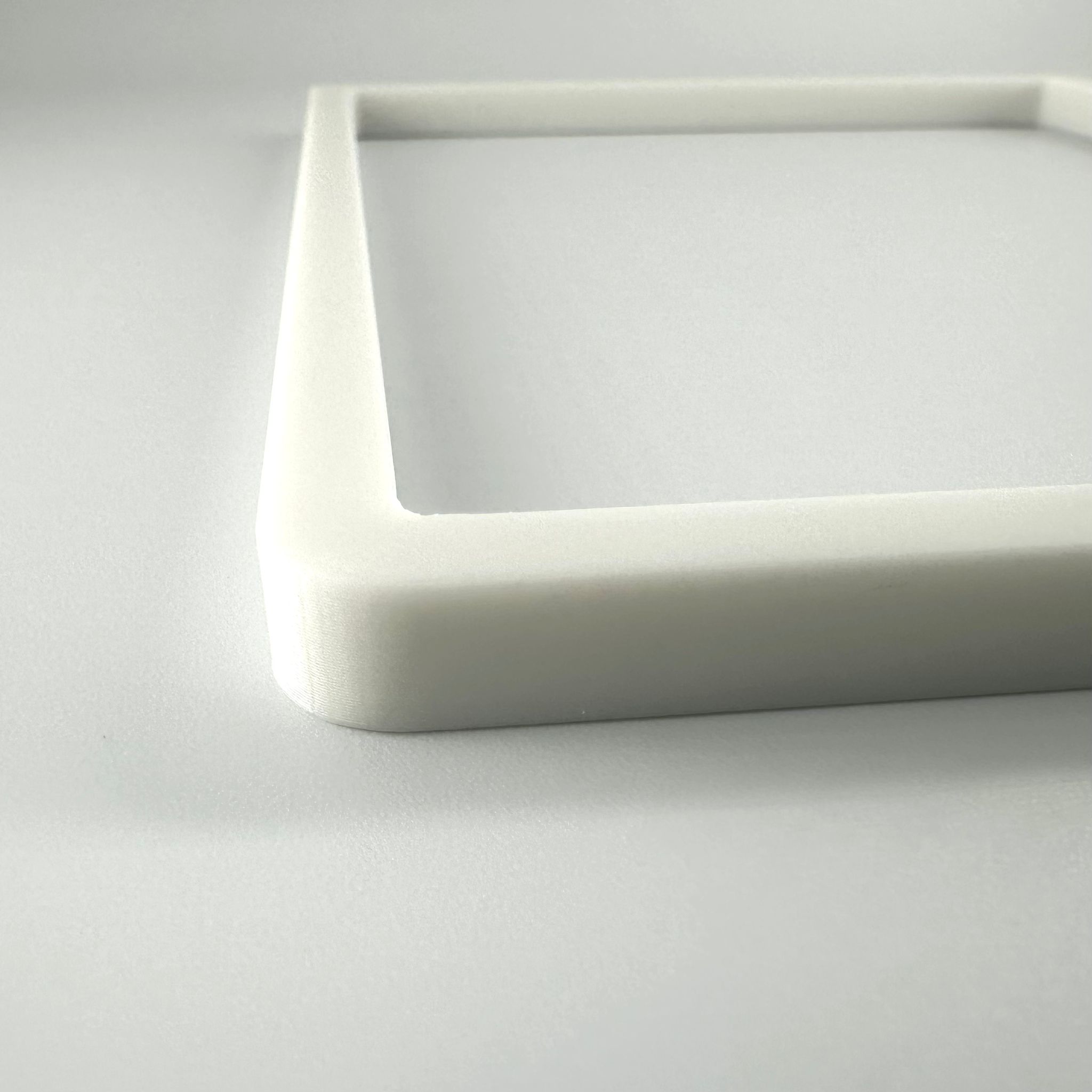
The transition from a standard wall to a non-standard one happens faster than many realise. A single layer of plasterboard, a run of decorative panelling, or a thick tile can move the functional surface of the wall several centimetres away from the original electrical box. Finding a solution that fits to the millimetre provides immense psychological relief. It transforms a frustrating, "fudged" job into a clean, regulation-compliant finish that looks as though the backbox was installed at that depth from the start.
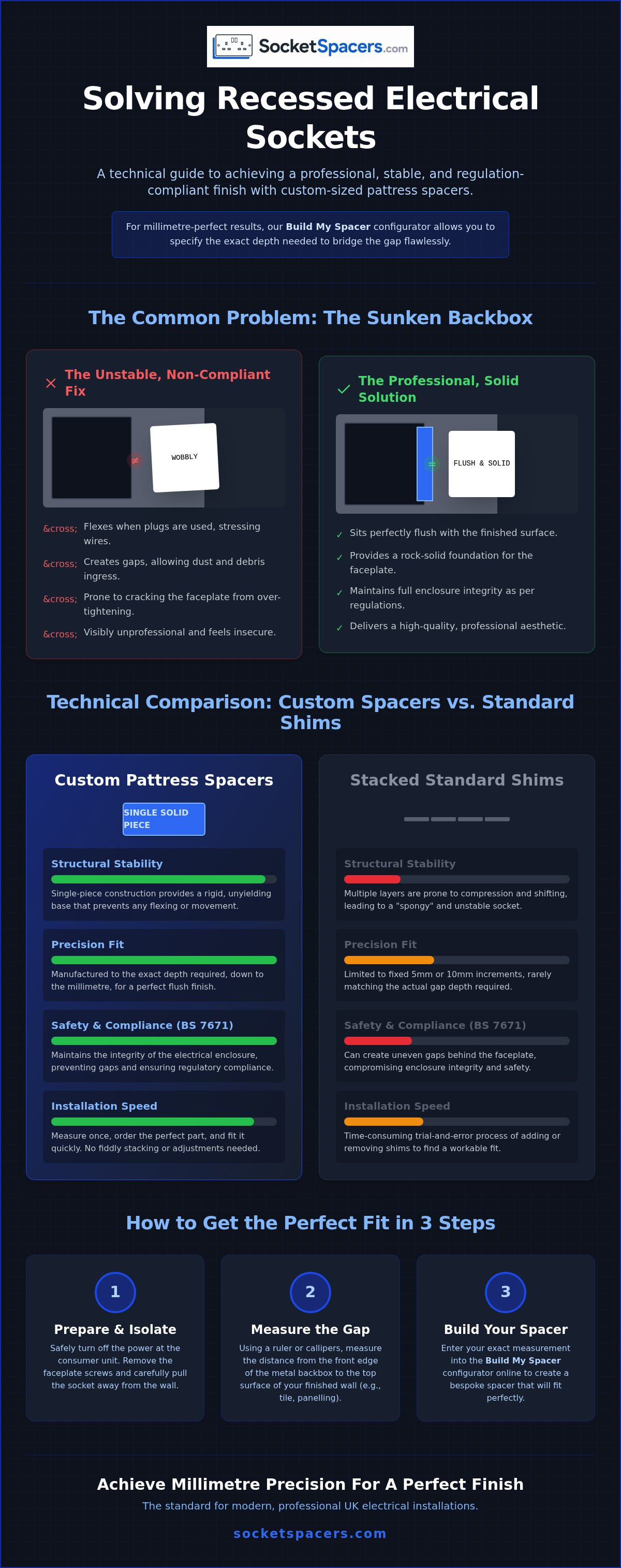
The Problem of the Sunken Backbox
Standard electrical installations typically assume a flat plaster finish. However, adding 10mm of porcelain tile and a few millimetres of adhesive quickly renders standard backbox depths insufficient. This creates a sunken fitting where the faceplate cannot sit flush against the wall. The result is a "floating" socket that flexes every time a plug is inserted. This movement isn't just an aesthetic annoyance; it puts physical stress on the terminal connections and can lead to loose wiring amongst the hidden gaps behind the plate. Exposed gaps also allow dust and debris to enter the enclosure, which is a significant safety concern in any domestic or commercial setting.
Why 'Off-the-Shelf' Often Falls Short
Most electrical wholesalers only stock standard shims in fixed 5mm or 10mm increments. While these might work for basic repairs, they rarely offer the precision needed for bespoke architectural features like acoustic slat wood panelling or heavy stone cladding. If your wall depth has increased by 13mm, a 10mm spacer leaves a visible gap, whilst stacking two 10mm spacers creates an unsightly protrusion.
Custom sizing eliminates the need to stack multiple flimsy components. Stacking shims is inherently unstable and often results in a "spongey" feel when you try to secure the faceplate. A single-piece custom size electrical pattress spacer provides a solid, continuous foundation. This rigidity prevents the faceplate from bowing or cracking when the M3.5 screws are tightened, ensuring the installation remains rock-solid for years to come.
Custom Spacers vs Standard Shims: A Technical Comparison
When faced with a recessed backbox, the traditional fix involves stacking plastic shims or, in worse cases, metal washers. While these might bridge the distance, they lack the structural integrity of a single-piece component. A custom size electrical pattress spacer provides a continuous, solid foundation that prevents the faceplate from flexing. Multiple layers of shims are prone to compression and shifting over time, which eventually leads to a wobbly socket. By contrast, a bespoke spacer is manufactured to the exact depth required, ensuring the screws pull the faceplate against a rigid surface rather than a series of shifting layers.
Installation speed is another critical factor for busy tradespeople. Measuring once and fitting a single part is significantly faster than fiddling with various combinations of shims to find the right depth. If you're dealing with a non-standard depth, the Build My Spacer tool allows you to create a part that fits perfectly without the spongy feel of stacked components. This efficiency reduces time on site whilst ensuring a higher quality of work.
A client's trust is built on visible quality. Seeing a precision-fit component instead of a makeshift stack of washers signals competence and attention to detail. Tightening M3.5 screws against uneven shims is a primary cause of faceplate cracking, particularly with modern, slimline plastic fittings. A solid spacer distributes this load evenly across the entire surface area of the backbox rim, protecting the hardware and the wall finish.
Safety and Regulation Compliance
Maintaining enclosure integrity is a core requirement of the BS 7671 wiring regulations. Gaps behind a faceplate are more than an eyesore; they are a breach of safety standards that can expose live parts to the wall cavity. This increases the risk of fire and electrical faults. A solid custom size electrical pattress spacer ensures the wiring remains fully enclosed within a non-conductive barrier. Using non-conductive, solid materials is the professional choice to prevent accidental contact and ensure the installation remains safe for the lifetime of the building.
Comparison Table: Bespoke vs DIY Fixes
This table illustrates why a single-piece approach is superior for both safety and aesthetics in modern UK homes.
Criteria: Stability
Bespoke Spacer: High (Single-piece solid plastic)
DIY Shims/Washers: Low (Prone to compression)
Criteria: Safety
Bespoke Spacer: Full enclosure of live parts
DIY Shims/Washers: Potential gaps and dust ingress
Criteria: Install Speed
Bespoke Spacer: Fast (One-step fitting)
DIY Shims/Washers: Slow (Trial and error stacking)
Criteria: Aesthetic Finish
Bespoke Spacer: Flush and professional
DIY Shims/Washers: Often uneven or protruding
Tradespeople looking to maintain these high standards can find UK socket spacers designed for rapid, professional installation.
How to Measure for Your Bespoke Pattress Spacer
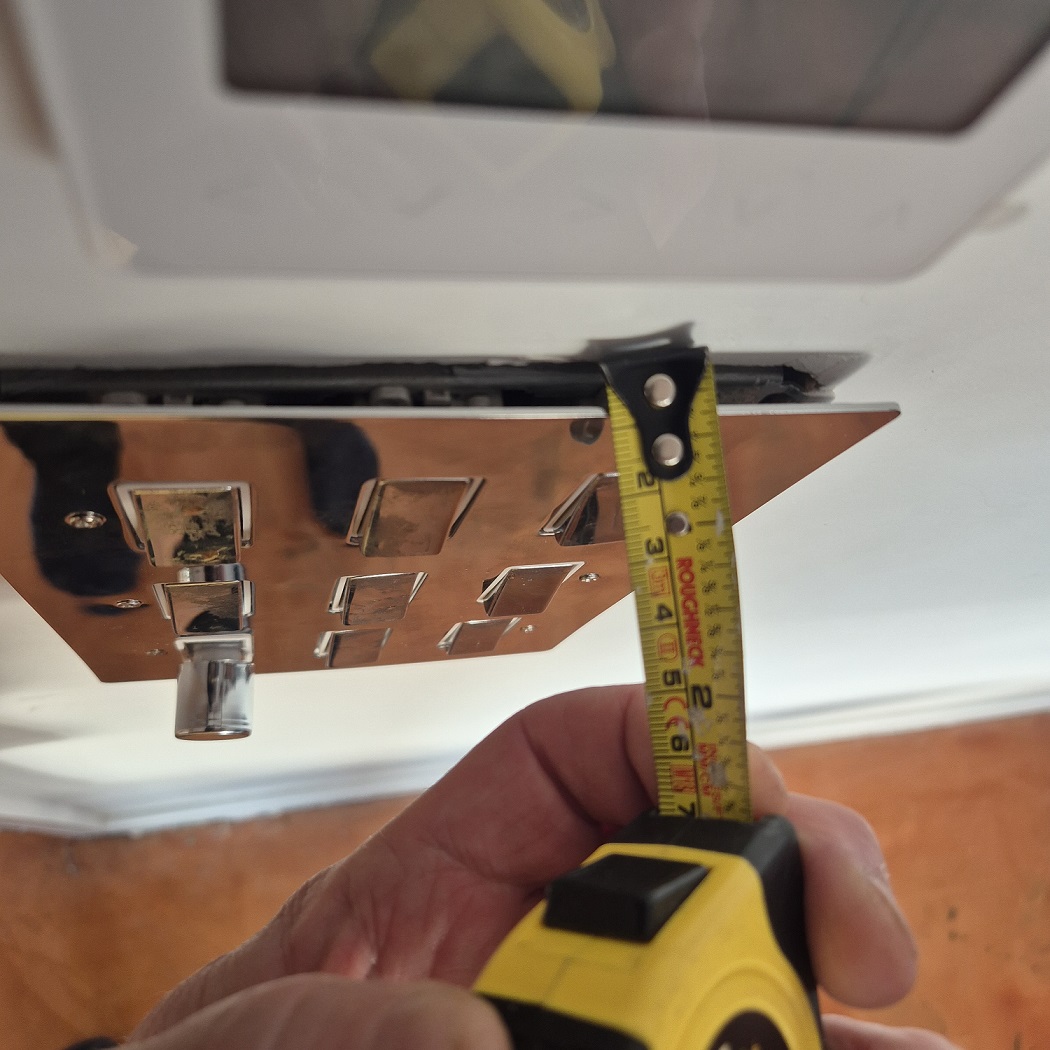
Accuracy is the foundation of a flush finish. Because a custom size electrical pattress spacer is manufactured to your specific requirements, a "near enough" measurement will often result in a faceplate that either sits proud or leaves a slight gap. To achieve the best results, you don't need expensive equipment, but you do need a methodical approach. The most reliable tools for this task include digital callipers or a depth gauge. If these aren't available, a standard steel ruler used in conjunction with a straight edge will suffice.
To begin, place your straight edge horizontally across the wall opening. Measure the distance from the underside of the straight edge to the front rim, or "lip", of the recessed backbox. It's vital to measure from the metal or plastic rim rather than the internal base of the box. Once you have this depth, you can document the specification for your bespoke order. Always check for level across the entire width of the opening; if the wall surface is uneven, take measurements at both the top and bottom of the box to ensure the spacer provides a uniform surface for the faceplate.
Measuring for Single and Double Gang Sockets
Standard UK single gang faceplates are typically 86mm x 86mm, whilst double gang versions are 146mm x 86mm. When specifying your custom size electrical pattress spacer, ensure you select the correct gang type to match your hardware. If you're measuring after tiling, ensure you account for any slight protrusions of adhesive that might prevent the spacer from sitting flat against the backbox. If you're measuring before plastering, you must know the exact thickness of the planned skim. Generally, it's safer to measure once the final wall finish is in place to avoid guesswork.
Precision Specification for Contractors
For contractors working on high-end residential projects, millimetre-perfect consistency is expected. When managing multiple rooms with varying finishes, such as a tiled kitchen and a wood-panelled lounge, we recommend documenting each requirement in a spreadsheet. List the room, the gang type, and the required depth for each outlet. This organised approach allows you to place a bulk order for bespoke extension frames that arrive labelled and ready for immediate installation. This level of specification ensures that every socket across the entire project maintains the same high-quality, flush-fitting aesthetic. By providing exact data, you eliminate the risk of installation errors and ensure a professional result that aligns with the structural standards required for a high-quality hand-over.
Advanced Applications for Large Extension Frames and Multi-Gang Spacers
Complex layouts, like triple or quadruple gang sockets on a kitchen island, present unique alignment challenges that standard shims cannot resolve. If one backbox is set even two millimetres deeper than the next, the resulting "staircase" effect ruins the clean lines of a high-end installation. A single-piece custom size electrical pattress spacer designed to span multiple gangs ensures every faceplate sits on the same horizontal plane. This approach is essential for modern media centres where power, data, and AV points are clustered together. By providing a continuous, level surface, the spacer allows for a unified aesthetic that makes multiple individual fittings look like a single, integrated unit.
Increased Wiring Space for Smart Switches
Modern smart home technology often requires more physical room than a standard 35mm backbox can provide. Bulky Wi-Fi dimmers and smart modules take up significant volume, often leaving barely enough room for the copper conductors and terminal blocks. Forcing these components into a tight space can lead to heat build-up or loose connections. Instead of the invasive process of digging out the wall to install a deeper box, which risks damaging structural integrity or expensive decorative finishes, you can use a bespoke spacer to create an extension collar. This forward extension provides the necessary managing plug socket wiring space whilst keeping the installation safe and compliant with current heat dissipation requirements.
Bespoke Multi-Gang Solutions
When multiple electrical boxes are set into a wall, slight variations in depth are almost inevitable. These discrepancies become glaringly obvious once a single large faceplate or a row of adjacent switches is fitted. A bespoke frame acts as a corrective structural layer, compensating for these differences to provide a perfectly level mounting surface. These made to measure socket surrounds are particularly useful when installing heavy, premium metal faceplates on fragile surfaces like thin wood panelling, acoustic slats, or glass splashbacks. The spacer transfers the clamping force of the screws directly to the backbox rim; this prevents the faceplate from crushing or cracking the delicate wall material behind it. This mechanical support is vital for maintaining the longevity of both the electrical hardware and the interior finish.
Order bespoke multi-gang spacers for your project
Why Bespoke Manufacturing is the Standard for Modern UK Electrics
The shift towards bespoke quality in British interior design has transformed how we approach electrical installations. Modern renovations frequently involve non-standard wall depths that standard off-the-shelf components can't accommodate. Using a custom size electrical pattress spacer has become a technical necessity for those aiming to meet modern standards. This move towards precision manufacturing reflects a broader trend in the UK construction industry where "near enough" is no longer acceptable for safety or style. When a component fits perfectly the first time, there's no need for adjustment or replacement. This efficiency is vital for maintaining project timelines whilst reducing the carbon footprint of a renovation by eliminating the waste of discarded, ill-fitting parts.
The SocketSpacers.com Manufacturing Process
At SocketSpacers.com, we bridge the gap between digital specification and physical installation. Every order is handled with a focus on material durability and long-term electrical safety. Once you submit your dimensions via the Build My Spacer configurator, the part is precision-manufactured to your exact requirements. This process ensures that every spacer we ship across the UK meets rigorous quality control standards. By using high-quality, fire-retardant materials, we provide components that support national projects and individual home renovations with equal reliability. Our methodical approach ensures that the final product is a solid, single-piece unit that outperforms any combination of shims.
The Professional's Finishing Touch
The best electricians understand that their reputation is built on the details that others might overlook. Leaving a gap behind a faceplate or a wobbly socket is a hallmark of a rushed job that can lead to call-backs and client dissatisfaction. By incorporating a custom size electrical pattress spacer, you demonstrate a commitment to excellence that clients notice immediately. This professional attention to detail ensures that the faceplate sits flush against the wall, providing a clean aesthetic amongst even the most complex decorative finishes. It's the difference between a functional installation and a high-end finish that stands the test of time.
If you want to maintain this level of precision in all your work, we encourage you to browse the SocketSpacers.com blog for more technical guides on complex installations. Whether you're dealing with acoustic panelling, stone cladding, or multi-gang media centres, our bespoke solutions provide the solid foundation required for a truly professional, regulation-compliant result. Precision manufacturing is the only way to guarantee a perfect fit for every unique architectural challenge you encounter on site.
Achieving Precision in Every Installation
Securing a flush finish is no longer a matter of guesswork or makeshift shims. By moving to bespoke manufacturing, you eliminate the safety risks of exposed wiring and the aesthetic failure of wobbly sockets. We've seen how a custom size electrical pattress spacer provides a rock-solid foundation for single, double, and multi-gang units, even when dealing with non-standard depths or smart home modules. These precision-fit components are trusted by UK electricians to deliver results that meet the highest professional standards and the latest wiring regulations.
Choosing a tailored solution means you can fit once and finish with confidence. Whether you're working on a high-end kitchen island or a complex media centre, the right support prevents faceplate cracking and ensures long-term reliability. It's the most efficient way to maintain your reputation for excellence whilst providing a result that clients will appreciate for years to come.
Design your perfect fit with our Build My Spacer tool
Take the final step toward a perfect installation today. Your projects deserve the precision of a bespoke fit.
Frequently Asked Questions
What is the difference between a pattress box and a spacer?
A pattress box is the primary enclosure, either recessed into the wall or surface-mounted, that houses the electrical wiring and screw lugs. A spacer is a secondary extension component that sits on the front rim of the box to bring the mounting surface forward when the box is buried too deep. Spacers are used to bridge the gap created by new tiling, plastering, or decorative panelling without needing to replace the original backbox.
Can I use a custom spacer for a light switch as well as a socket?
Yes, custom spacers are suitable for almost any standard UK electrical fitting. We manufacture custom fit light switch spacer plates alongside our socket spacers to ensure a consistent, flush finish across all wall-mounted controls in your home. Whether you are installing a single dimmer switch or a double gang power outlet, the principle of extending the backbox rim remains the same.
Are custom plastic spacers fire-rated and safe for UK homes?
Our spacers are manufactured from durable, non-conductive materials designed to maintain the integrity of electrical enclosures. They provide a solid physical barrier that prevents dust and debris from entering the backbox whilst ensuring that live parts remain fully enclosed. This approach is much safer than using makeshift shims or leaving gaps, as it complies with the requirement for enclosures to be fire-resistant and structurally sound.
What should I do if my backbox is too deep after tiling?
You should install a custom size electrical pattress spacer to bring the mounting surface flush with the new tile level. Measuring the exact depth from the backbox rim to the finished tile surface allows you to order a single-piece extension that provides a rigid foundation. This prevents the faceplate from flexing or cracking when the screws are tightened, which is a common issue when backboxes are set too deep.
How do I install a custom size electrical pattress spacer safely?
Start by isolating the power at the consumer unit and verifying it is off. Unscrew the faceplate and gently pull it forward to reveal the wiring. Slide your bespoke spacer over the cables and seat it firmly against the rim of the recessed backbox. Finally, push the faceplate back against the spacer and secure it using M3.5 screws of the appropriate length to reach the internal lugs.
Do I need longer screws when using a socket spacer?
Yes, you will almost certainly require longer M3.5 screws than the standard 25mm versions typically supplied with faceplates. If you add a 15mm spacer, for example, you should use 40mm or 50mm screws to ensure they have enough thread to grip the backbox lugs securely. Using screws that are too short can lead to a loose fitting, whilst forced screws can damage the backbox threads.
Can you manufacture spacers for non-standard or multi-gang faceplates?
We specialise in bespoke manufacturing for a wide variety of electrical configurations. This includes multi-gang socket spacers and large extension frames for complex media centres or kitchen islands where several units are grouped together. You can specify the exact dimensions and gang count you need by using our Build My Spacer configurator tool to ensure a perfect fit for your specific hardware.
How long does it take to receive a bespoke manufactured spacer?
Bespoke orders are manufactured in the UK and dispatched once the precision printing and quality control checks are complete. Whilst lead times can vary based on current demand and the complexity of the order, we prioritise efficient production to get your parts to you as quickly as possible. National shipping ensures that tradespeople and homeowners across the country can receive their custom components without significant project delays.
Electrical Safety
Always isolate the circuit and confirm it is dead before removing a socket or switch faceplate. Only carry out the work if you are competent to do so. If you find damaged wiring, signs of overheating or anything unsafe, stop and contact a qualified electrician.